Francisco J. Tovar-Lopez
Welcome to my professional portfolio! With over 20+ years of experience as a biomedical engineer specializing in microfluidics, sensors, and MedTech innovation, I am dedicated to advancing healthcare technologies and fostering global collaboration.
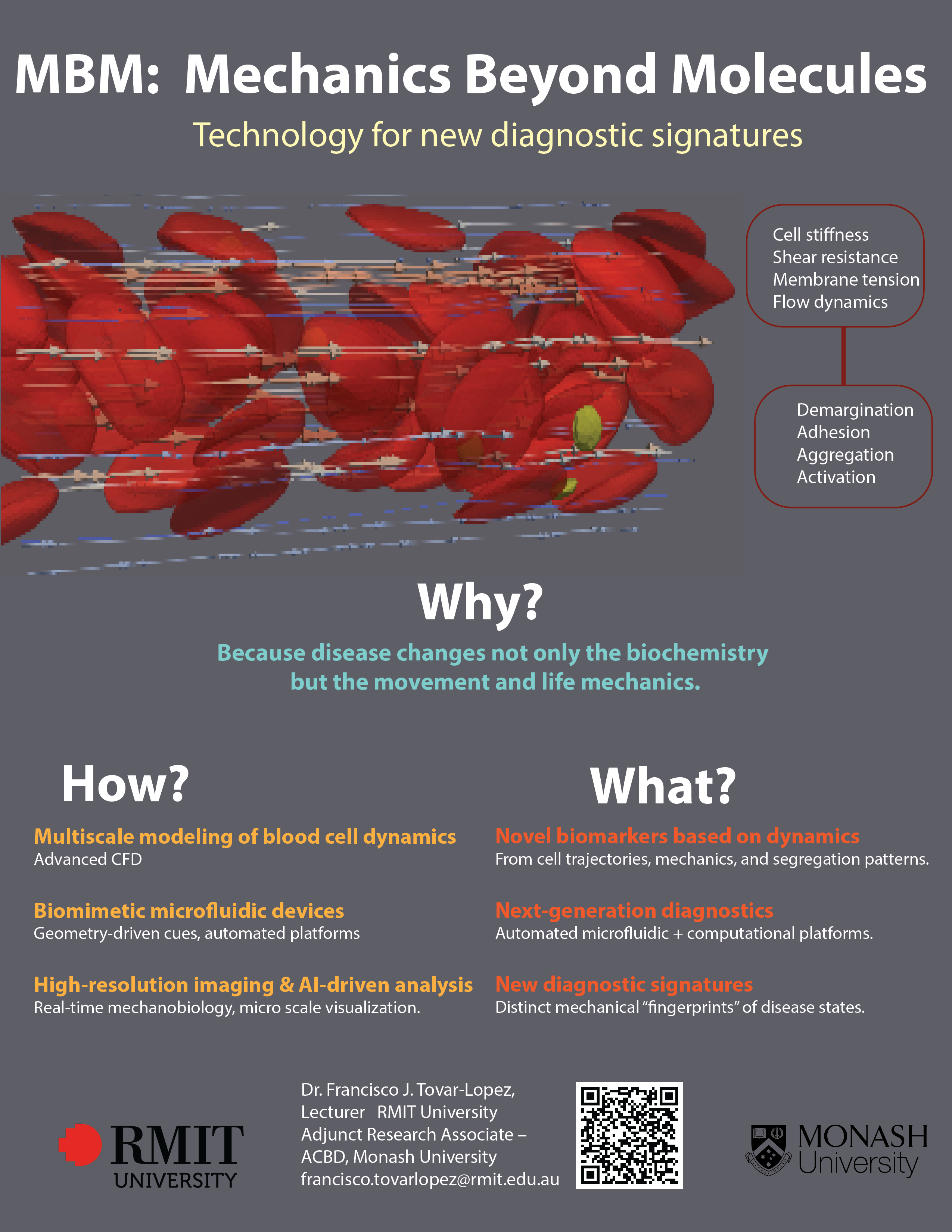 < MBM is my research program exploring how geometry, forces and multiscale flow encode a mechanical information layer in blood and soft tissues. By extracting these mechanical diagnostic signatures, we can detect physiological and pathological states that biochemical markers alone cannot reveal. I integrate microfluidics, viscoelastic flows, CFD modelling and real-time sensing to measure how cells and plasma respond to controlled mechanical fields. This work is now evolving toward identifying and standardizing mechanical signatures across platelets, red blood cells, plasma rheology and disease states.
Collaboration / Services
- Scientific/Technological Project Management
- Medical device design
- Data processing, Design automation, AI.
- Mechanical design, electronics, microfluidics design
- Advanced fabrication, 3d printing, nanoscribe, micro-fabrication
- Sensor calibration and data acquisition, instrumentation, and measurements
- Course coordination
- Research proposals, writing, article revision
- Ansys, COMSOL, Fluent, Python, C++, Shapr3D, SolidWorks
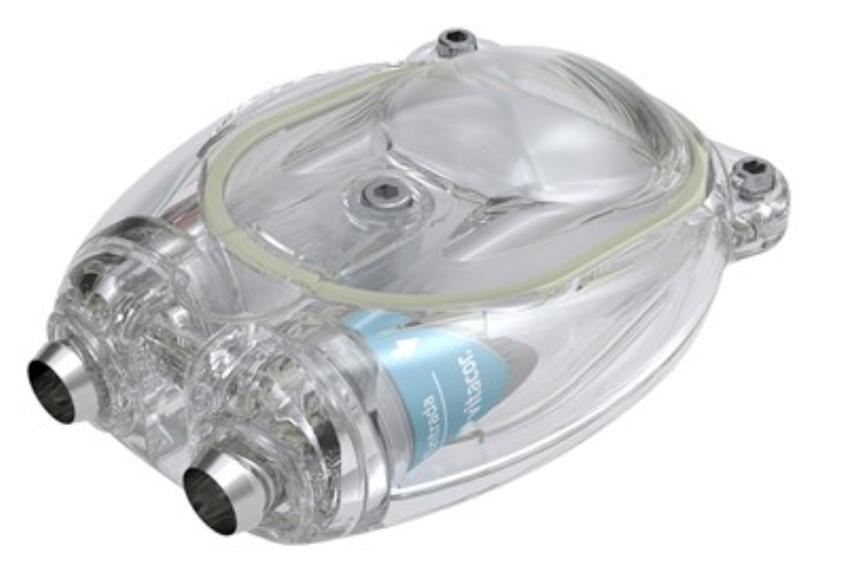
Patents - Artificial Heart Sealing
 >
>
Patent Number: 8376927
Solution for static seal structures in pump housings to prevent compressed air leaks.
Patents - Platelet Aggregation
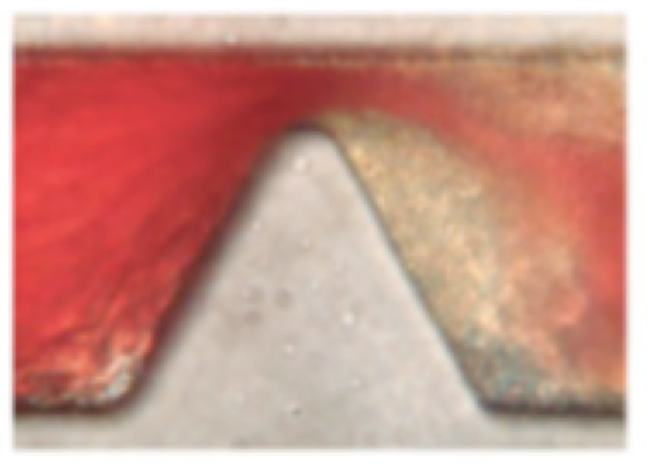
Patent Number: US20120058500A1
Innovative design for inducing platelet aggregation at specific locations for diagnostic purposes.
Awards
- Distinguished Mexican 2024
- Adjunct Professor, Monash University
- ARC Discovery Early Career Researcher Award (DECRA)
- RMIT Vice-Chancellor Fellowship
- Overseas PhD Scholarship, Mexican Government
Lab-on-a-Chip
Foundational MBM device: A microfluidic operator that uses geometry and controlled shear gradients to reveal hidden mechanical signatures in platelet activation.
This Lab-on-a-Chip (Lab on a Chip 2010) was an early example of what would later become my Mechanical Information Layer framework. By shaping flow fields and stress distributions, the device amplifies subtle differences in platelet mechanics, converting weak biophysical signals into measurable diagnostic patterns.
Technologies: Parameterised design (Python, C++), photolithography, CFD/FEA modelling, real-time imaging.
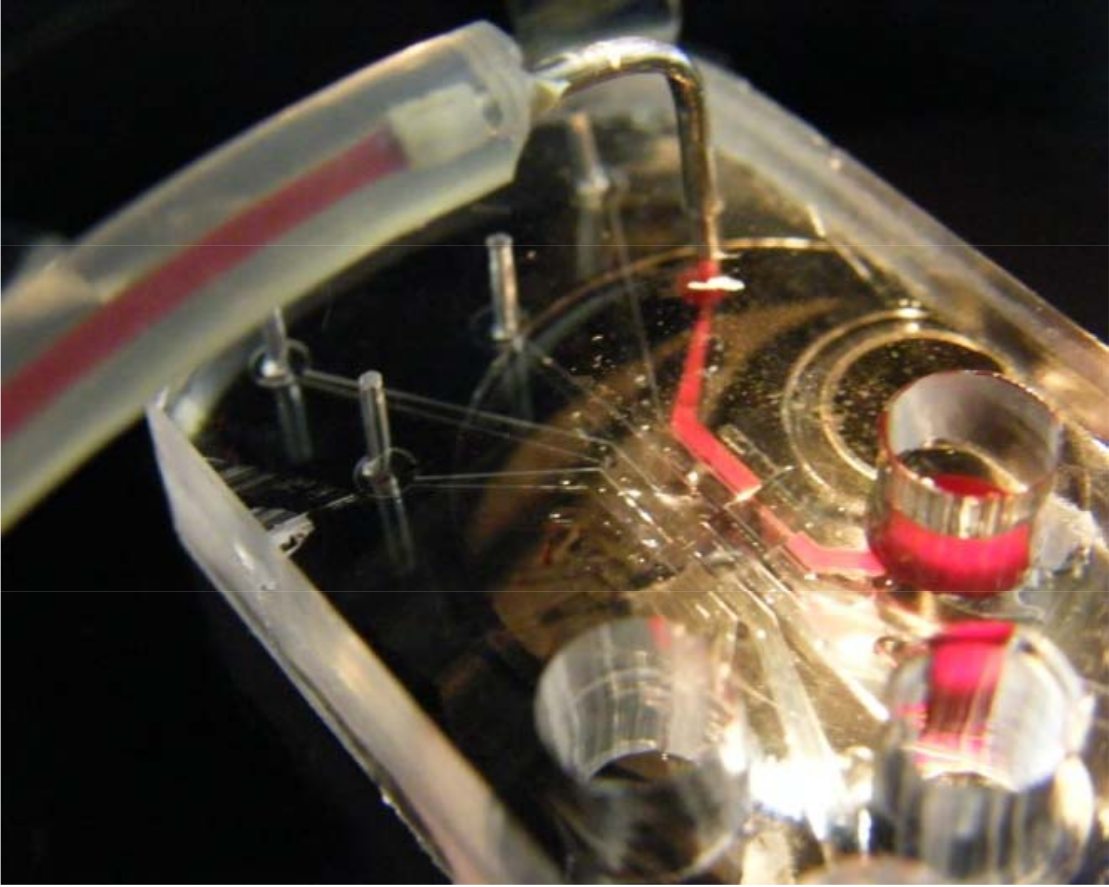
Lab-on-a-Chip
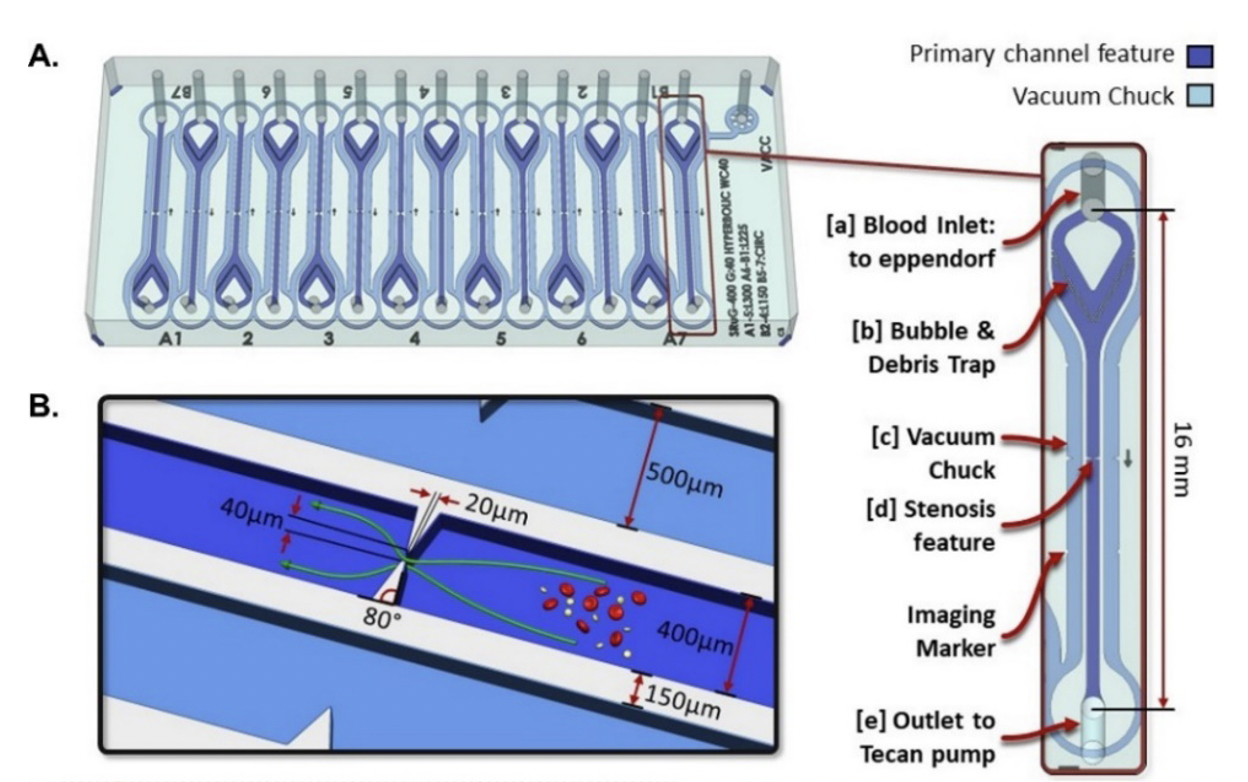
A device to study cellular mechanotransduction.
During my PhD, I observed platelets reacting to blood flow acceleration. A decade later, my foundational work enabled discoveries on Piezo1 strain sensing, ATP signaling, and clot formation mechanisms under extreme conditions. New staff designed and fabricated the device to test mechanotransduction hypothesis for cell deffects.Advanced fluid manipulation (Droplets)
Droplet-on-soft shuttle A novel way of transporting droplets of fluids from diferent species using a soft "shuttle" and sequential activation of electric potential (electrowetting). Droplet velocity is characterized by centroid tracing using deep learning algorithms for image processing.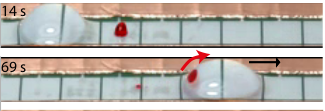
Advanced sensing
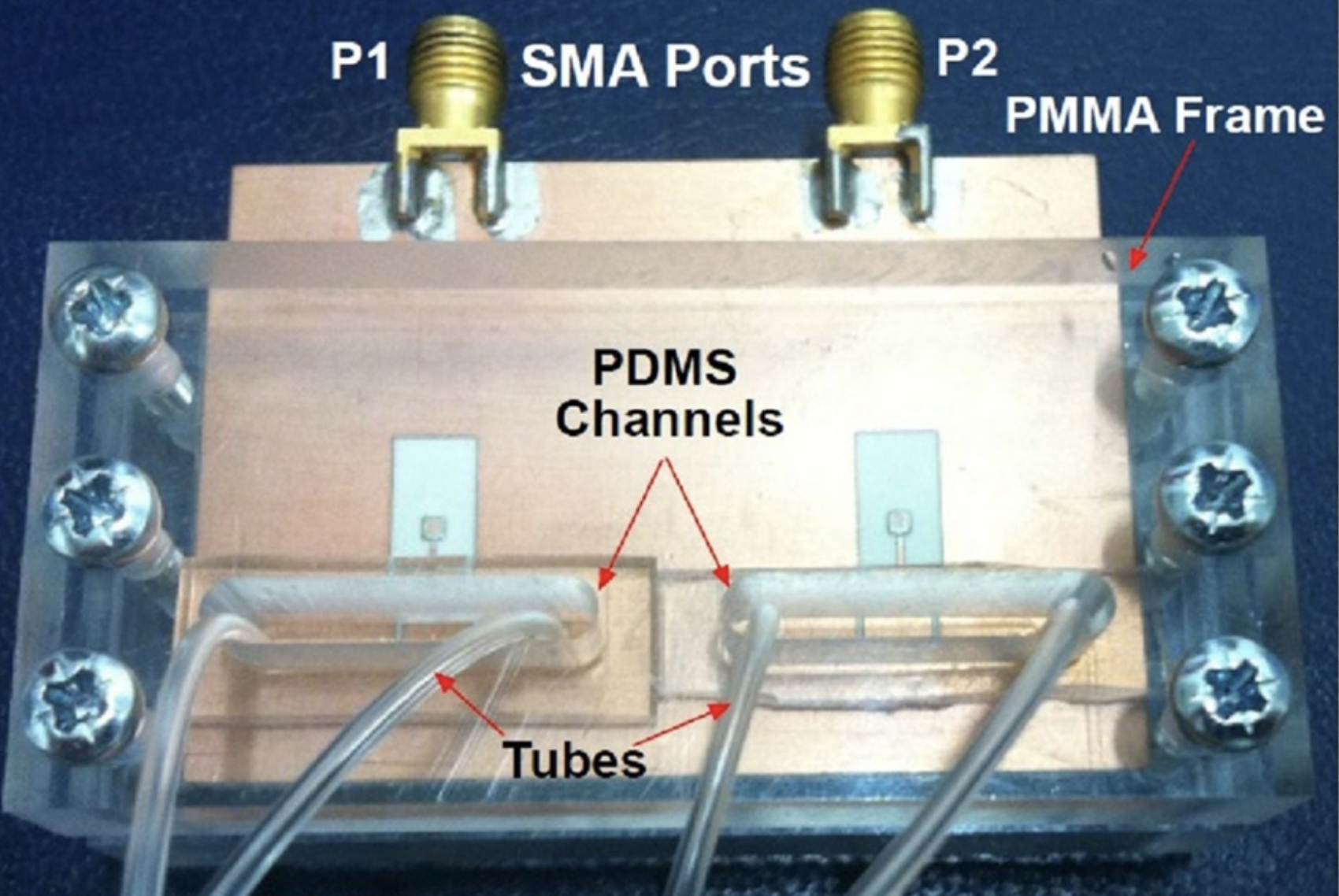 < Differential microwave sensor.
This article presents a microwave sensor for detecting the water volume fraction in the glycerol–water solutions. The sensor is designed using a planar transmission line terminated with a series RLC resonator. The proposed sensor offers a high sensitivity, compact, real-time, and robust measurement platform with potential application in bio-electronics, biofuel characterizations, and food industry.
< Differential microwave sensor.
This article presents a microwave sensor for detecting the water volume fraction in the glycerol–water solutions. The sensor is designed using a planar transmission line terminated with a series RLC resonator. The proposed sensor offers a high sensitivity, compact, real-time, and robust measurement platform with potential application in bio-electronics, biofuel characterizations, and food industry.
Sensors for Biomedical and Environmental Challenges
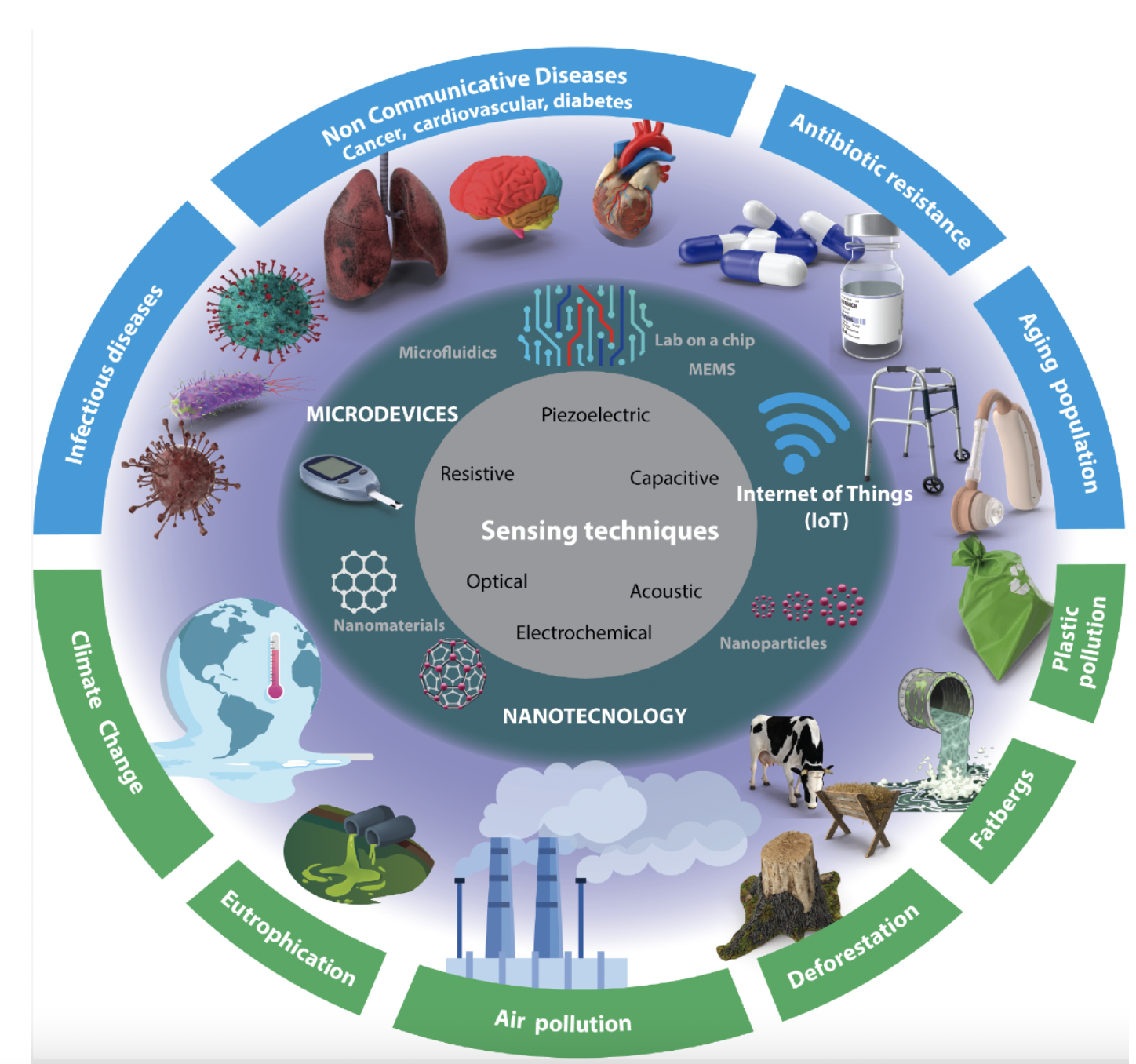 This review article presents unique perspectives on coming challenges such as antibiotic resistance and how emerging technologies such as microfluidics and novel sensors, will help in addressing these challenges. Editor's choice
Global Impact - Overview
As the president of Red GlobalMX Australia, I have led efforts to promote cross-border collaborations between Australia and Mexico, achieving:
- Establishing presence in key cities (Sydney, Canberra, Melbourne, Perth).
- Intercontinental collaboration across universities.
- Delivering strategic initiatives like webinars and networking events.
Global Impact - Media
Academia
Courses I have taught include:
- Biomedical Instrumentation
- Mechanics and Materials
- Human Flows
- Cardiovascular Engineering
- Research Methods
Students learn about electronics, sensors, control systems, and mechanics through interactive and practical approaches.
Highlights
- Inventor
- Project manager
- Intelectual property
- Documentation
- Communication
- Inter-disciplinary